Latest

Monday, November 16, 2009

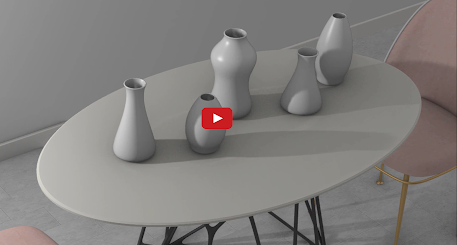
Three methods for lighting interiors with Brazil for Rhino

In this video tutorial you'll learn several methods for lighting interior scenes using Brazil for Rhino.

http://Brazil.McNeel.com

Friday, September 4, 2009

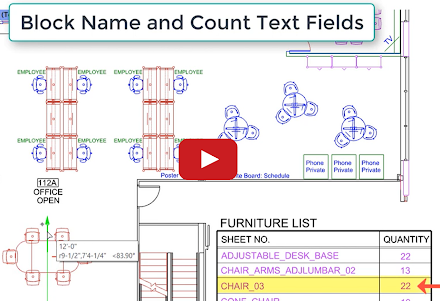
Revit to Rhino and Back!

Here's another workflow between Revit and Rhino, this time inserting Revit geometry in Rhino as reference to build the necessary freeform surfaces and then take them back into Revit,

http://www.wikihow.com/Create-a-Freeform-Roof-in-Revit

Cheers!

Rhino to Revit from HOK

In this interesting blog from HOK, aimed at sharing their knowledge in CAD, take a look at this detailed tip on how to go from Rhino to Revit,

http://hokcadsolutions.blogspot.com/search/label/Rhino


Enjoy!

Tuesday, June 16, 2009

Using a GI Photon map in Brazil

Learn how to set up an interior rendering using Brazil for Rhino. This tutorial covers the process of choosing settings for a GI Photon map as well as using the Rhino Sun with Brazil.

Wednesday, April 22, 2009

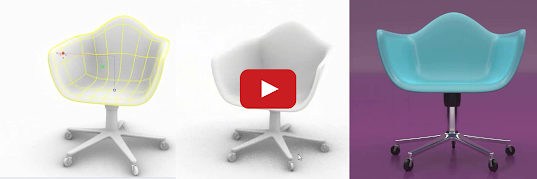
Product rendering in Brazil


Learn how to set up a product rendering in Brazil for Rhino. Material creation concepts and the use of HDRI environments are covered in this advanced rendering tutorial.

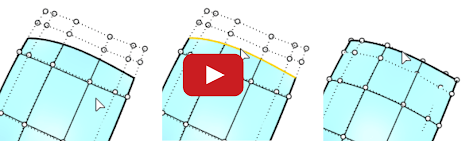
Control point editing


Learn some techniques for editing control points in this beginner level Rhino tutorial. Commands covered include "SetPT", "Weight" and "MoveUVN".

Tuesday, April 7, 2009

Custom patterns with Paneling Tools


Learn how to make custom paneling routines using existing 2D and 3D geometry and the Paneling Tools plugin for Rhino. You can download and try Paneling Tools through the main wiki page on the plugin.
http://en.wiki.mcneel.com/default.aspx/McNeel/PanelingTools.html

Saturday, April 4, 2009

The basics of Paneling Tools


Learn the basics of using the Paneling Tools plugin for Rhino. You can download and try Paneling Tools through the main wiki page on the plugin.
http://en.wiki.mcneel.com/default.aspx/McNeel/PanelingTools.html

Monday, March 30, 2009

An introduction to Brazil for Rhino


Learn how to set up a simple rendering using Brazil for Rhino. This beginner video shows how to control the quality of the rendering produced in Brazil by adjusting simple skylight and anti-aliasing settings. The creation and assignment of materials and environments is also covered.

You can download and try Brazil for Rhino at www.brazil.mcneel.com

Friday, February 20, 2009

Modeling a Y-branch polysurface


Learn how to model a smooth Y shaped polysurface in Rhino using the Sweep1 and BlendSrf commands.

Thursday, February 19, 2009

Arraying patterns


Learn how to make patterns of objects using the Array command in Rhino.

Filleting method for solids


Learn a few techniques for using the FilletEdge command over an entire model.

Modeling a lofted button


Learn how to use the Loft command to make button shapes in Rhino.

Monday, February 9, 2009

Modeling from reference images


Learn how to use the PictureFrame command to place reference images for your model in Rhino.

Flowing objects along a surface


Learn how to use the command FlowAlongSrf in Rhino to morph any selection onto a target surface.

Saturday, January 17, 2009

Modeling screw threads (1 of 2)


Learn how to model screw threads using helical curves and booleans in Rhino. The threads shown are the type you would see on the end of a light bulb. Changes to the cross section profile and path will provide you with ways of making alternate styles of threads as well.

Video: 1 of 2

Modeling screw threads (2 of 2)


Learn how to model screw threads using helical curves and booleans in Rhino. The threads shown are the type you would see on the end of a light bulb. Changes to the cross section profile and path will provide you with ways of making alternate styles of threads as well.

Video: 2 of 2

Friday, January 16, 2009

An overview of the Rhino 4 user interface


Learn the basics for navigating the Rhino 4 interface.

Basic object types in Rhino


Rhino supports a variety of basic object types for you to work with. In this beginner tutorial you'll learn what they're called and how to make them.

Establishing geometric continuity


Learn how to produce smooth transitions between curves in Rhino.

Friday, November 7, 2008

The Background Scene

Check this blog for a cool tip on how to align your model to a background image, so that you can then render it and open it in Photoshop to place the real photo and do further editing,
http://people.bureauofarchitects.com/forum/topics/2275696:Topic:3471

Cheers!

Tuesday, November 4, 2008

Viewport Access

Here are 3 tips for a quicker access to your viewports.
- When you have a maximized viewport you can shuffle to the next by pressing ctrl+tab. This avoids having to double click, coming back to the default 4view and double clicking on the next view.
- But if you do like the clicking, you can at least simplify it by setting it as a single-click. Go to the Options... > View > Under "Viewport Properties", select "Single-click maximize".
- Another way of quickly having access to the viewports is by enabling Viewport Tabs. Just type ViewportTabs and select Show. You can then click on the tabs to make a certain view active. It's a quick way of renaming your views as well, just by double-clicking on the tab.

Cheers!

Wednesday, September 24, 2008

Advanced Object Snaps

The advanced object snaps are tools that allow you to pick on geometry in a more sophisticated way than the normal object snaps. Among my favorites "Between" and "Alongline" (which by the way, are nestable within a command, meaning you can type them while a command is active). These tools can be found under menu: Tools > Object Snaps. The first block of osnaps correspond to the traditional ones found at the bottom of Rhino's interface; the second block are the advanced ones.

To quickly access these last mentioned, you can hover over the normal object snaps (at the bottom of Rhino's interface) with your mouse, while pressing the Ctrl key down. This will switch from normal to advanced osnaps. I learnt this tip a few days back from Gijs de Zwart, while trying to win a competition on who knew more about Rhino. This item made me loose ;-)...


Have a blast!

Tuesday, July 8, 2008

Associative Dimensions

We all know Rhino does not have associative dimensions, but there's a workaround that can be used in a lot of cases. By grouping the dimensions to the dimensioned object, you can then edit the object, with, lets say _Scale and the dimensions will follow along.

Cheers,

- vane

Monday, June 30, 2008

Auto Targetting in Walkabout Mode

We'll thank Jeff LaSor, Rhino's main developer for display related items, for this tip! When you're inside Walkabout mode (for those who haven't tried it, look it up in the help file), you're usually walking towards an object. It's moreless like you entered a room and Rhino's camera are your eyes (of course it also feels like you are a machine and you can only move forward, backwards or sideways). So as you move, you don't get to see an object as you do in Rhino's normal navigation mode, whereas the camera rotates around a target. To get the advantages of normal navigation mode (rotating around an object) while in Walkabout mode, you can activate Walkabout mode (_Walkabout) > use the arrow keys or MMB to move forward/backwards > and when you get to an object that you would like to rotate around (make sure the white cross in the middle of the screen is on the object) > press the right mouse button and then the left mouse button > and move the mouse around. You can also use CTRL+SHIFT+RMB to shift between both navigation modes.

This is what Jeff calls "auto-targeting"!

Cheers,

- vane

Monday, June 9, 2008

Trimming or Splitting Surfaces

Trimmed surfaces are sometimes tricky because, once they are trimmed there are certain commands you can't use on the trimmed edges. Useful commands that allow to create or maintain continuity, such as _MatchSrf or _Symmetry become useless.

A possible workaround to this issue is, if appropriate to the situation, to _Untrim the trimmed edge and then to _Split the surface using the command line Isocurve option. This option allows you to keep the same geometry structure for your surface. If you turn ctrl pts on (F10), you'll see all points lie on the surface edge. You can erase the unwanted split part of the surface and use any command you want on the resulted surface!

Cheers!

Monday, June 2, 2008

Organic Toolbar - Chapter 2

This post is not about the Organic Toolbar, but more about how to replace it! In Chapter 1, we saw how to compress/expand points that were at either side of the Origin (Cplane or World). But if your points are elsewhere, these buttons won't work the expected way.

By shift+right clicking on each button, you will see that these are simply macros using the Scale1d command and the Origin as a reference point. Therefore to make it work, when your points are all at one side or the other of the Origin, you can simply use the Scale1d command, finding as an origin point, the midpoint between the points you wish to expand/compress along, and as a scale factor one of the selected points.

Cheers!

Organic Toolbar - Chapter 1

The Organic Toolbar is a nice little tool that allows you to move objects in any viewport, in the right direction (x,y,z). So you don't have to worry about having the right viewport activated, as opposed to using the alt+arrow keys.

This toolbar contains several buttons, indicating whereas you will move the selected objects in X, Y or Z, up or down, etc. You can find this toolbar in the toolbar list that shows up, when right-clicking in a grey area of the interface.

It is specially very useful when point editing. For me, the best ones, are the "Compress along..." or "Expand along..." buttons, that allow you to move 2 or more points equidistantly in the opposite direction or towards each other. Now, beware of having the points you want to compress/expand all at either side of the origin....

Friday, May 30, 2008

Surface UV display mode

In Rhino 4.0, surface and polysurface objects can be set to show their U and V directions by applying a new or modified display mode to a viewport or to individual objects using SetObjectDisplayMode.


To make a new wireframe display that shows U and V directions, open Options > Appearance > Advanced Settings. In the list of display modes, select WireFrame and click the Copy button near the bottom of the page. The current Wireframe display mode will be duplicated and you will see the controls for this new mode. You may want to rename it from the default 'Copy of Wireframe'. In the 'tree' view of the display mode controls on the left, choose Objects, then Surfaces. On the Surfaces page look for 'Surface Isocurve Settings' The default setting here is 'Use object's color' but the drop down list includes 'Use Specified UV colors'. Selecting this option will change the control to show color swatches for U and V - click on the swatches to access the color picker dialog to set the colors you like. Other display modes that show surface isocurves can be changed using this same setting in that display mode's controls.

Make any other changes you like in the display mode and exit Options. The new display mode will show up in the viewport title context menus by default so that the viewport can be changed as a whole to this display mode, and it will be available to the SetObjectDisplayMode command, which sets selected objects' display modes in the active viewport. You can save a custom display modes from the Options > Appearance > Advanced Display page by selecting it from the list and clicking the Export button.

Monday, May 26, 2008

Accessing Toolbars in Rhino 4.0

For those of you who have just moved from Rhino 3.0 to Rhino 4.0 or who have yet to discover all the Rhino 4.0 improvements, this is one that is quite a time-saver. Specially, for those of you who have small screens...

In Rhino 4.0 you can access any toolbar by clicking with the right mouse button anywhere on the grey space of the interface. When you do this you have the list of all Rhino toolbars, as well as any plug-in you might have installed. You just need to click or unclick to make them visible! As opposed to Rhino 3.0, where you had to do it through the menu.

Cheers!